Can everyone be an Influencer in the Creator Economy?

Influencer marketing has become a popular and effective way for brands to promote their products and services on social media platforms. It involves partnering with social media influencers who have a large following and influence in a particular niche or industry to promote the brand's products or services to their audience.

Influencer marketing has been shown to be effective in driving brand awareness and engagement, as influencers are seen as trusted sources of information and their followers often value their opinions and recommendations. In fact, according to a survey conducted by the Influencer Marketing Hub, 63% of marketers plan to increase their influencer marketing budgets in 2021.

However, the effectiveness of influencer marketing can vary depending on a number of factors, including the influencer's audience, the type of content being promoted, and the quality of the partnership between the brand and the influencer.

Moreover, not every influencer can make a sustainable revenue stream from influencer marketing. While some top influencers can earn millions of dollars through sponsorships and brand partnerships, many others struggle to make a living from it. This is because there are a number of challenges that influencers face when it comes to monetizing their social media following, such as the changing algorithms of social media platforms, the difficulty of finding consistent brand partnerships, and the competition from other influencers.

To be successful in influencer marketing and to make a sustainable income from it, influencers need to have a number of key skills and attributes. These include a deep understanding of their audience, the ability to create high-quality content that resonates with their audience, strong relationship-building skills to establish partnerships with brands, and the ability to stay up-to-date with the latest trends and best practices in social media marketing.

In addition, influencers need to be able to demonstrate the ROI of their partnerships to brands by providing metrics and analytics that show the impact of their promotions on engagement, sales, and other key performance indicators. This requires a strong grasp of analytics and data analysis, as well as the ability to communicate the value of their services to brands.

Overall, while influencer marketing can be an effective way for brands to engage with their audience and promote their products and services, it is not a guarantee of success. The effectiveness of influencer marketing depends on a number of factors, and not every influencer can make a sustainable income from it. To succeed as an influencer, one needs to have a strong understanding of their audience, the ability to create high-quality content, and the skills to build and maintain partnerships with brands.

From YouTube Man to World Champion

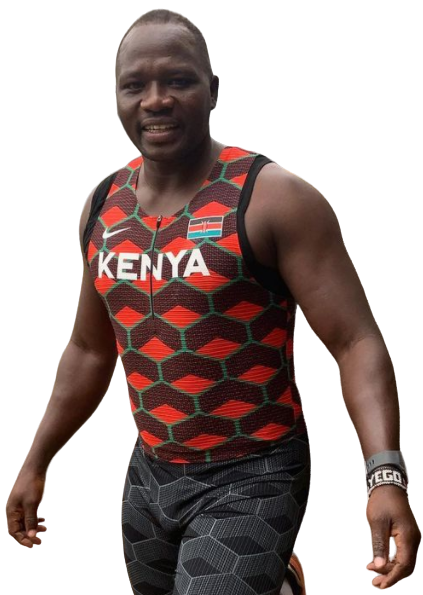
Julius Yego is a Kenyan javelin thrower who gained worldwide attention when he won the gold medal at the 2015 World Championships in Beijing, China. What makes his story unique is that he learned to throw the javelin primarily through watching YouTube videos and teaching himself.

Yego was born in rural Kenya in 1989, and was inspired to take up the sport of javelin throwing after watching a television broadcast of the 2004 Olympics. However, he had no access to proper coaching or training facilities, and he struggled to make progress on his own.

In 2008, Yego discovered YouTube and began watching videos of other javelin throwers, studying their techniques and trying to replicate them on his own. He experimented with different throwing styles and techniques, and he spent countless hours practicing and refining his skills.

Despite the lack of formal coaching or training, Yego's hard work and dedication paid off. He began competing in local and regional competitions, and he quickly rose through the ranks to become one of the top javelin throwers in Kenya.

In 2011, Yego set a new national record with a throw of 78.34 meters, and he went on to win the gold medal at the All-Africa Games later that year. However, he continued to rely primarily on self-teaching and YouTube videos, as he still had no access to proper coaching or training facilities.

Yego's breakthrough moment came in 2015, when he won the gold medal at the World Championships in Beijing with a throw of 92.72 meters, becoming the first Kenyan ever to win a field event at a global championship. This was a remarkable achievement for someone who had never received formal coaching, and who had learned to throw the javelin primarily through YouTube videos.

Yego's success story is a testament to the power of hard work, dedication, and self-motivation. Despite facing numerous obstacles and challenges, he was able to achieve his goals through sheer determination and a willingness to learn and innovate.

However, Yego's story also highlights the importance of access to coaching and training resources, particularly for athletes from underprivileged backgrounds. While Yego was able to succeed through self-teaching, it is likely that he would have achieved even greater success if he had access to proper coaching and training facilities earlier in his career.

In the years since his victory at the 2015 World Championships, Yego has become an inspiration to athletes around the world, and he has used his platform to advocate for greater access to coaching and training resources for athletes from

Mo Farah - from a refugee to a great champion

If we were to tell you the name Hussein Abdi Kahin, we believe it would mean nothing to you. That's the real name of the guy we all know as Mo Farah. His life story is real proof that everything is possible because Mo went from a refugee living on the edge of poverty to a four-time Olympic champion.

The guy who became known to us for his great long-distance racing. Was born in Somalia, and due to the civil war raging in his native country. He went to Great Britain when he was only nine years old. He was taken there by a woman he did not know at all. An unknown woman told him they were going to his European relatives. It was the first airplane flight in his life. Then he was given the name by which the whole world knows him, and his real documents, along with all the details of his family, were torn up before his eyes.

He didn't know anyone there and had to do various jobs in order to survive. Farah did housework and took care of other people's children so that he could afford to eat something that day. For the first few years, they didn't let him go to school at all, which he started at the age of 12. At school, he was introduced as a refugee from Somalia and everyone immediately noticed that he looked unkempt with a poor command of the English language.

The people who introduced themselves as his parents never came to the school for parent-teacher conferences. His renaissance begins the moment physical education teacher Alan Watkinson discovers his talent for athletics on the track. From then on, athletics became number one in his life, and at that moment, the only language he understood. Mo found an escape from reality in athletics and would run all day. Farah complained to the said professor about everything he had experienced and Watkinson then contacted social services and found another family from Somalia

He finally had the peace he needed, and everything he went through had a major impact on him. Mo Farah went on to be world champion six times and the Olympic champion four times. He failed to qualify for the Tokyo Olympics and then announced that his career was coming to an end. As things stand, April this year at the marathon in London will be his final farewell.

Farah is turning 40 soon and has nothing left to prove, and his life story and all that athletics have brought him shows that you should never give up in life and that you should firmly believe in your dreams.

Sports Content Creators, Give your viewers what they want - Feedback !

Inspired by the Olympian who learnt from YouTube, we reached out to grassroots athletes to ask them how they used video to learn new skills and tricks for their sport?

The results very extremely insightful:

  • Above 80% told us they used video platforms like YouTube to learn new skills 
  • Over 90% said that they were keen to get feedback from content creators 
  • Almost all of them were open to the idea of paying content creators for feedback

See survey snapshot below :

Searching for content on social media can be time consuming. So we asked athletes if organising content for them in a systematic manner would help? Again 90% of them told us that this would be helpful. So we did the following:

  • Segmented content by skills for each sport
  • Allowed athletes to bookmark and create a customised curriculum in their dashboard
  • And off course, the ability to get feedback and download those videos for their keeping

In summary, if you are a content creator that is giving away all your skills and knowledge for free with the hope of gaining followers. Only for your upsell to be a generic product like clothing, vitamins or equipment. Think again, you already have a captive audience that wants your feedback. Join the Invictus movement and start monetising your craft by giving feedback. Reach out with any questions - support@invictussport.coach

Invictus SportsTech is a Creator Economy Platform that is inspired by the Olympian who learnt from YouTube. We are enabling sports content creators to monetise their craft by providing feedback to their viewers. Our long term mission is to end mental and financial hardship faced by our sporting community. For more information, visit us at www.invictussport.coach

Benefits of watching content on the Invictus Platform

The current generation of grassroots athletes watch videos to learn new tricks and skills. In fact this is nothing new, Julius Yego an Olympic medalist learnt to throw the Javelin by watching videos. Hence the nickname “YouTube Man” 

Motivated by the exploits of Julius Yego we explored what role we can play to help grassroots athletes learn more effectively via video. We built the Invictus platform to deliver the following benefits to grassroots athletes:

  • Receive Feedback: We’ve have an inbuilt video analysis tool to enable athletes to record themselves performing a skill and send it to their creator of choice. So that the Content Creator can effectively review and provide feedback to grassroots athletes 
  • Structure: When looking for content, it can be a very time consuming process. If you are following someone via their social media accounts, you need to go through their entire content in order to find what you want. We have segment content based on skills. See example below, for soccer.

  • Customise: We know, to be the complete player or athlete - you need to take the positive influences of different creators and skills. Our platform allows you to curate content to build your own learning curriculum. See this video for more details 

Above all, grassroots athletes via the Invictus platform have access to global experts who can offer a different approach and style to improve their game. We are only just getting started. Join us as we democratise  sports coaching


Invictus SportsTech is a Creator Economy Platform that is inspired by the Olympian who learnt from YouTube. We are enabling sports content creators to monetise their craft by providing feedback to their viewers. Our long term mission is to end mental and financial hardship faced by our sporting community. For more information, visit us at www.invictussport.coach

Invictus Sport